Food & Drink
<instruction>
Use Cases
- Suitable for Food & Drink AI image generation workflows, with reusable structure for fast iteration.
- Best for stable, style-consistent outputs in iterative generation.
Notes
- Replace placeholders (such as
[OBJECT]and{variable}) with concrete subjects and contexts. - Keep core constraints first (composition, lighting, lens, materials), then add style modifiers gradually.
- If results become noisy, reduce prompt density and reintroduce key elements step by step.
#Food & Drink
Author@GdgtifySource URLhttps://x.com/Gdgtify/status/2004986136335110526
Prompt Template
<instruction>
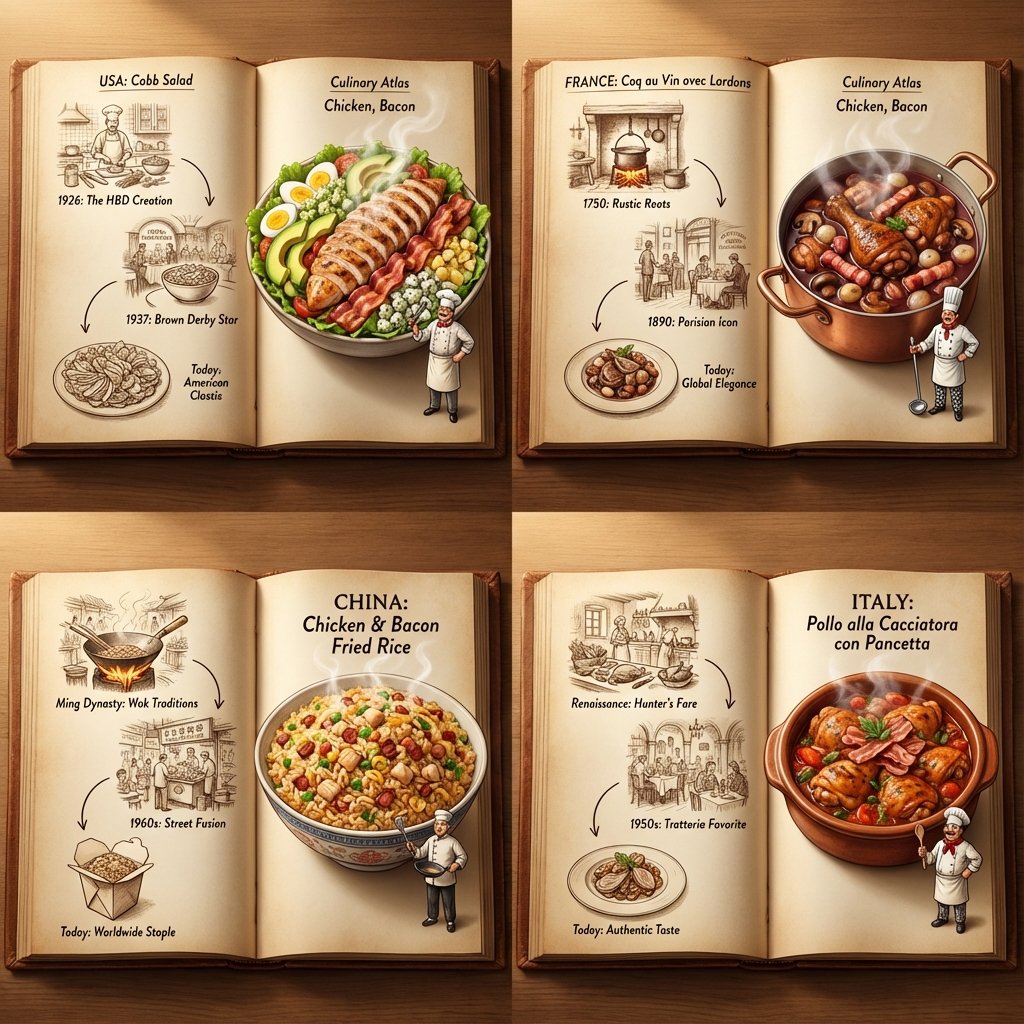
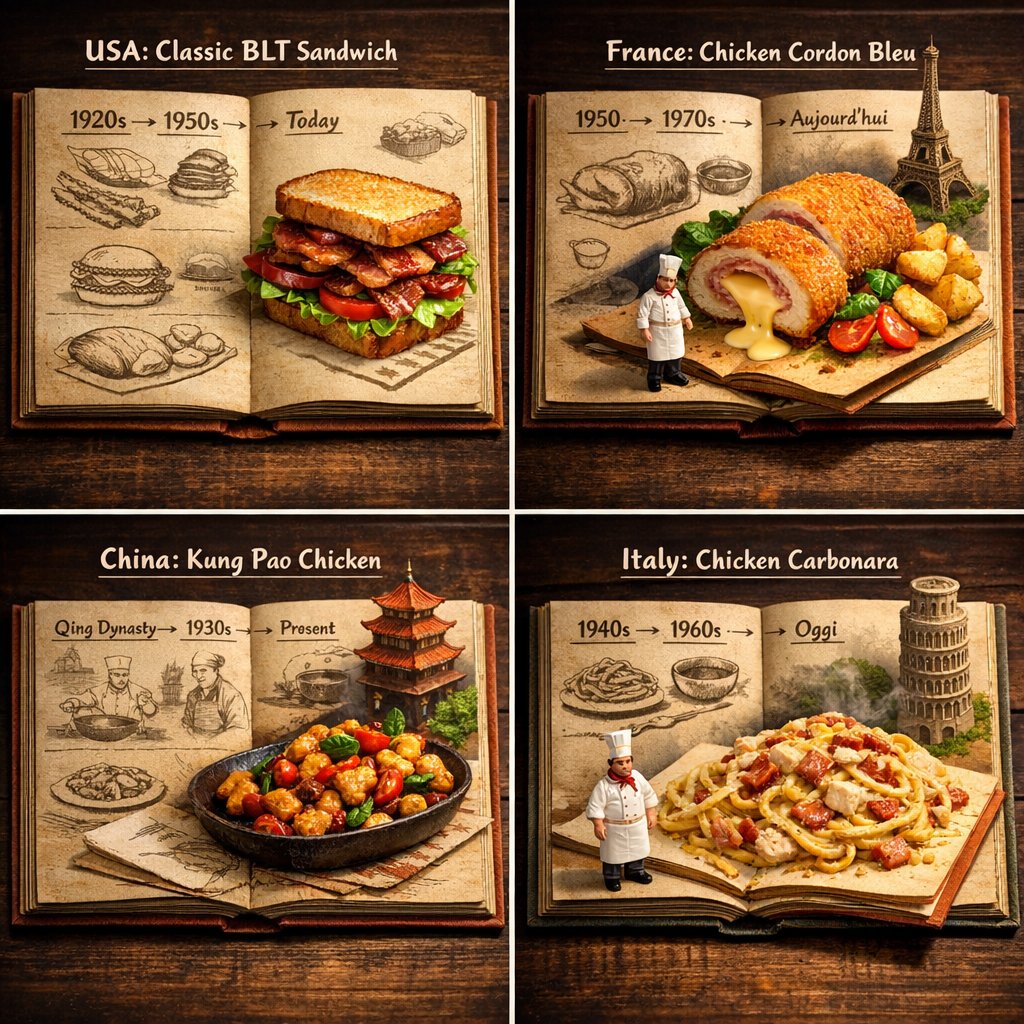
Inputs: Ingredients = [User Choice, e.g., Chicken, Bacon]

Step 1: Global Analysis
Analyze the ingredients.
Select 4 Distinct Countries with a famous dish using these ingredients

Goal: A "Culinary Atlas" Grid showing 4 different cultural variations of the ingredients.

Layout Rule:
Output Format: A 2x2 Grid.
Content per Panel: Each of the 4 panels must show a Single Open Book Spread for that specific country.

Inside Each Panel (The Book Spread Rule):
Left Page (The History): 2D Vintage Sepia Sketches. A visual timeline or illustrated recipe of the dish (e.g., "1850 -> 1920 -> Today"). Flat, ink-drawn style.
Right Page (The Reality): 3D Pop-up Diorama. The finished, steaming meal emerges physically from the page. A tiny miniature chef from that country is standing on the page next to the massive food.
Consistency: All 4 books should look like part of the same series, but with different cultural contents.

Lighting: Cinematic top-down lighting, highlighting the depth difference between the flat left page and the 3D right page.
Output: 2x2 Grid, High Definition, Macro Detail.
</instruction>
Sample Images